
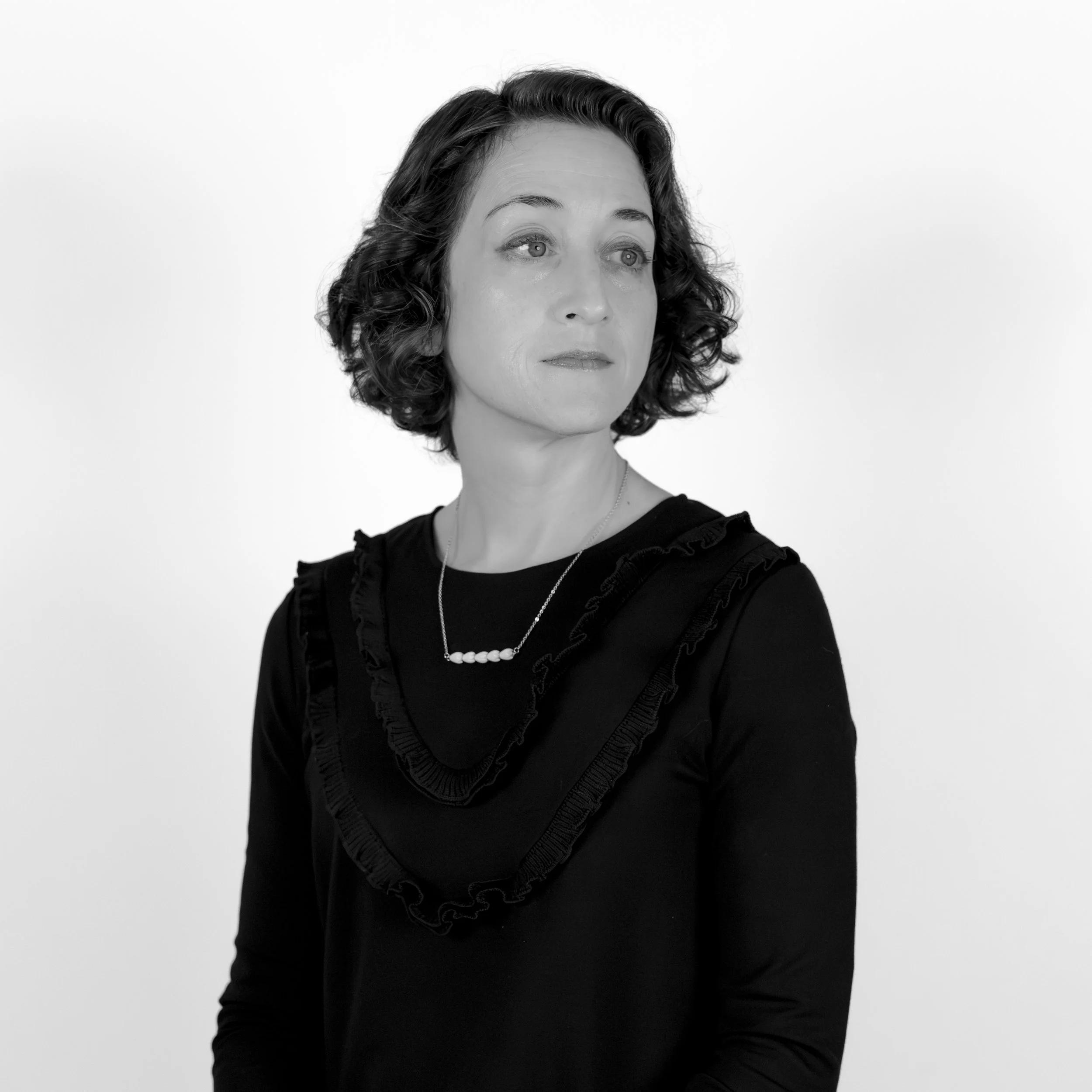
Amaranth Borsuk
Amaranth Borsuk is a poet, scholar, and book artist working at the intersection of print and digital media. She is the author of the poetry collections Pomegranate Eater and Handiwork as well as three collaborative books of poems including: Abra, with Kate Durbin and Ian Hatcher; As We Know, with Andy Fitch; and Between Page and Screen,with Brad Bouse. Her contribution to the MIT Press Essential Knowledge series, The Book, is a concise introduction to the book’s changing technologies that bridges book history, artists’ books, and electronic literature. She has collaborated on installations, art bookmarklets, interactive works, and poems, and is Associate Professor in the School of Interdisciplinary Arts and Sciences at the University of Washington Bothell.
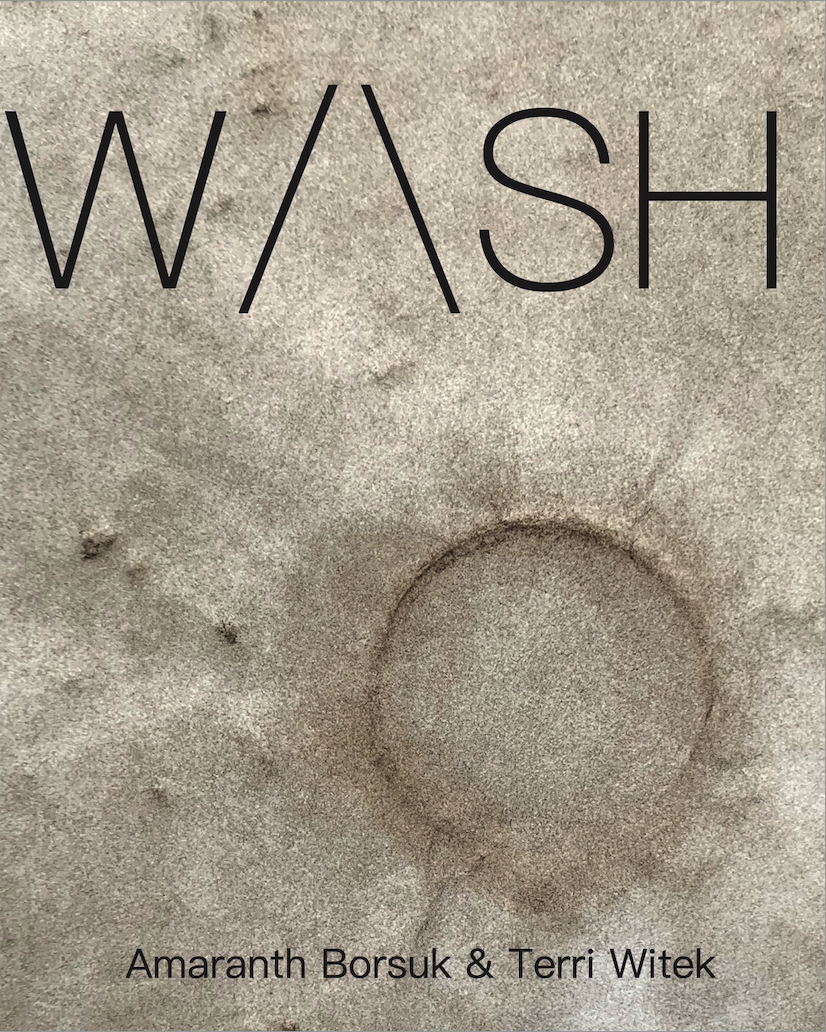
W/ \ SH BY AMARANTH BORSUK & TERRI WITEK
$30
In an unknown future, women of two worlds try to connect—to transmit the details of their survival. It may be the end of both realms: one nearly waterless, the other flooded. Linked by earth, sky, body, and loss, they test many methods to reach one another, hoping to course-correct for the sake of their children. Their transmissions warp and remake themselves, crisscrossing derelict worlds in search of channels that may never touch.
The Citizen of No Rain and the Denizen of Skyshot: two mothers—rain philosophers— trying to figure equations of damage when “the weather outside becomes the weather within.” Their message trails loop from the pan-pipes of Ancient Greece, to Apollinaire’s calligrammes, to our present atmospheres of rain and smoke, water and ash. Read closely for clues to our eco-future in these epistolary transmissions from the umbrella end-times. What a quirky, wonderful book. -Jena Osman
W/\SH is a beautiful, brilliant, visionary poem structured as an archive of correspondences between two mothers in a future a few hundred years from now, gathered by an archivist in an even farther future. Thus, the poem casts its speculative gaze backward as much as forward; it asks how we come to inherit our origin stories, given that any of our possible futures will be built as much on mythology as technology. W/\SH’s assembled fragments compose not only a textual archive, but a tactile, visual, aural one, testifying to the lingering materiality of long-gone bodies and voices, and to conditions of pressure that shape not only individual people but also the choices available to whole societies. Thus, the poem is also a fine-tuned inquiry into how to read—how to sift out from white noise the communications we may need in order to survive, how to glean what we need to know from the pockmarks shadowing a piece of paper or the recorded sounds of someone else’s life. Borsuk and Witek track myriad crossings back and forth over permeable boundaries: breath moving between body and environment, radio transmissions between a drenched world and a world in severe drought, experiential wisdom passing from older generations to younger, but also back the other way. Knowledge comes from the weather, from grandmothers, from children, from strangers. At its best, speculative literature operates as a divining rod, seeking out what constitutes human nature. What are we really made of? W/\SH answers that we are made of a desire to reach and recognize each other, and to hold each other together. Collier Nogues